
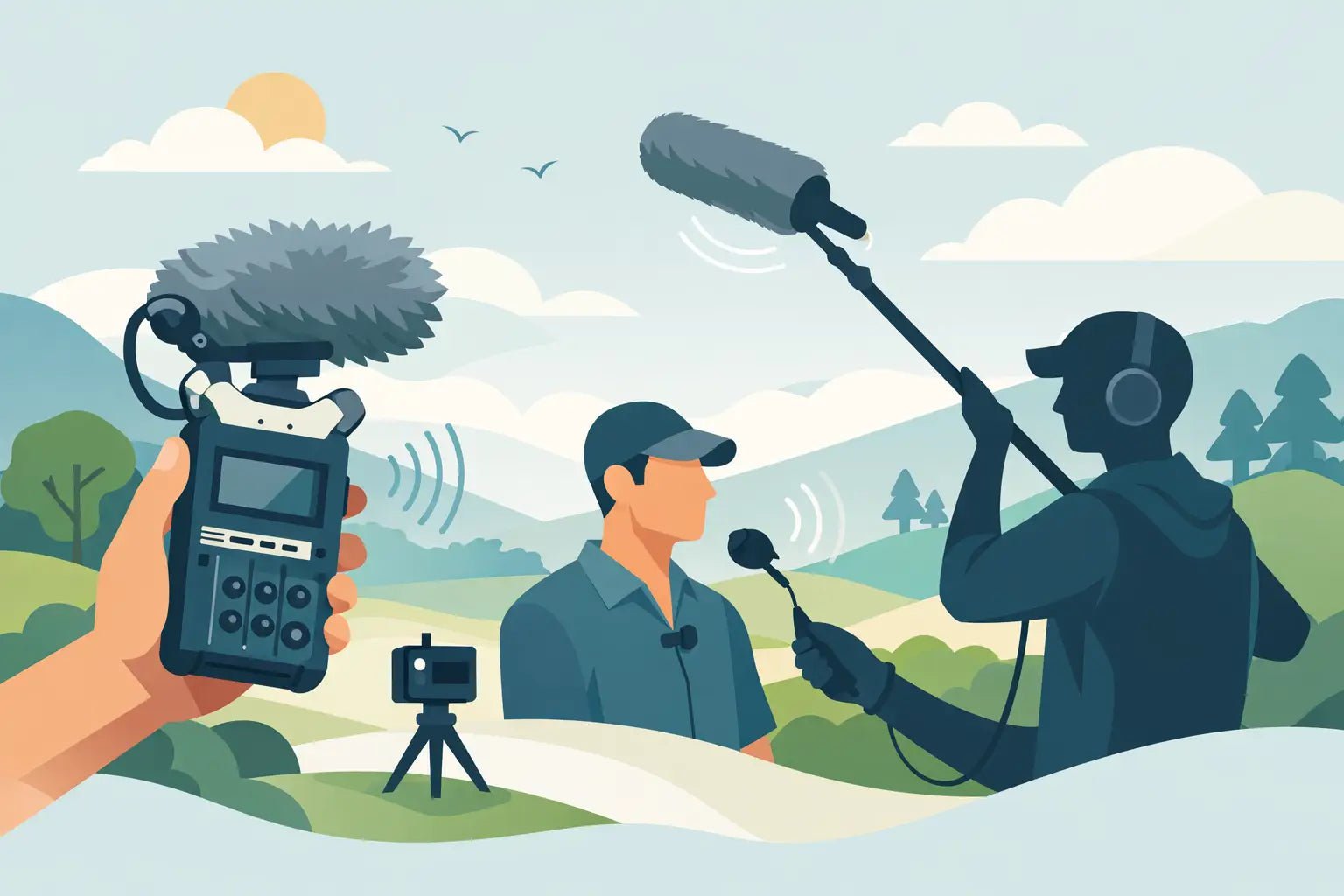
A perfect outdoor shot can still fall apart the second the wind hits your mic. You frame the scene, the light looks expensive, the energy is right - and then playback sounds like traffic, gusts, and a voice buried somewhere in the mix. If you want to know how to record better audio outdoors, the fix usually is not more gear. It is better choices before you hit record.
Outdoor audio is harder because nothing stays still. Wind shifts. Cars pass. Crowds swell. Even your own movement changes the sound from one second to the next. The creators who get clean, polished audio outside are not lucky. They build for control in places that have very little of it.
How to record better audio outdoors starts before you film
Most audio problems happen before the camera rolls. If your location sounds messy to your ears, your audience will hear even more of that mess once compression hits on social platforms. Built-in phone and action camera mics are especially unforgiving outdoors because they are designed for convenience, not isolation.
The fastest upgrade is getting the mic closer to your mouth. That single move does more for vocal clarity than chasing complicated settings later. A compact wireless mic changes the ratio between your voice and the world around you. Instead of asking your camera to hear everything, you are telling it what matters.
Placement matters just as much as the mic itself. If the transmitter sits too low on a jacket or too far off center, your voice can sound thin or inconsistent. Clip it high on the chest, keep it stable, and avoid loose fabric that rubs. If you are moving, check that nothing swings into the mic with each step.
This is where creator-first gear has a real advantage. Small, wearable systems fit mobile setups better, move better on camera, and do not turn a quick shoot into a production problem. Clean sound should not require a sound cart.
Wind is the real enemy
If there is one thing that ruins more outdoor audio than anything else, it is wind. Not dramatic wind, either. Even a light breeze can overload a mic capsule and create low-end rumble that is almost impossible to clean up naturally.
A windshield is not optional outside. Foam helps a little indoors or in very mild conditions, but outdoors you usually want a furry windscreen. It breaks up airflow before it hits the mic. That means less rumble, less distortion, and less post-production damage control.
Still, there is a trade-off. Larger wind protection can be more visible on camera. If aesthetics matter for your content, you may need to balance the cleanest sound against the cleanest visual. For most creators, the smarter choice is obvious. Audiences forgive seeing a windscreen. They do not forgive audio that sounds broken.
Your body can help too. Turn so your back or shoulder blocks the wind. Step beside a wall, vehicle, or corner that cuts gusts. Small positioning changes can make a major difference. Outdoors, a better angle often beats a better setting.
Pick locations with your ears, not just your eyes
A rooftop at golden hour looks great. It also might be full of HVAC noise, sirens, and wind tunnels. A beach can feel cinematic and still be a nightmare for dialogue. Great creators scout visually and sonically.
Before filming, stand still for 30 seconds and listen. What is constant? What comes and goes? A nearby road may seem manageable until a truck passes every 20 seconds. A park may feel quiet until a leaf blower starts up behind your second take.
The best outdoor locations often are not the most obvious ones. An alley with soft walls can reduce wind. A shaded side street may sound cleaner than a scenic overlook. A spot with controlled ambience usually gives you more usable footage than one with dramatic background noise.
If you cannot change locations, change timing. Early morning often delivers quieter streets, lighter wind, and fewer interruptions. Late afternoon can work too, but it depends on your city, your neighborhood, and what kind of content you are making. A lifestyle reel can survive some ambient texture. A spoken tutorial usually needs tighter control.
How to record better audio outdoors with simple mic technique
Good outdoor audio is often basic technique done consistently. Speak a little more directly toward the mic without sounding stiff. Keep a steady head position if the mic is clipped to clothing. If you are turning away constantly while talking, your levels and tone may shift more than you expect.
Distance is everything. If the mic is six inches from your mouth, your voice will usually beat the environment. If it is two feet away, the environment starts winning. That is why on-camera shotgun mics can be hit or miss for solo outdoor creators. They can work, but only when the camera stays close enough and the environment cooperates.
Wireless lav-style systems are often a better match for mobile creators because they keep the mic with the speaker, not with the lens. That matters when you are filming with an iPhone, walking with a gimbal, or mounting to a GoPro. Your framing can change without your voice disappearing.
It also helps to record a short test before the real take. Say a few lines at your actual speaking volume, then play them back with headphones. Not your phone speaker. Headphones. You will catch wind hits, fabric noise, and clipping immediately instead of discovering them later when the moment is gone.
Control what you can in the signal chain
Outdoor audio gets worse when multiple weak links stack together. A noisy location, a distant mic, bad gain staging, and aggressive platform compression can turn a decent take into something cheap fast.
Start with clean input. Set your gain so your voice is strong but not peaking. If your levels are too low, raising them in editing brings up the background too. If they are too hot, sudden laughs or emphasis can distort. There is no perfect setting for every scene, which is why a quick test matters.
Some modern wireless systems offer voice enhancement or noise reduction. Used well, these tools can help speech stay upfront, especially for run-and-gun creators who need speed. But this is another place where it depends. Heavy processing can make voices sound too sharp or artificial if the source recording is already poor. The best results come from combining smart capture with light enhancement, not trying to rescue bad audio after the fact.
If your setup allows local backup recording on the mic itself, that is a real safety net outdoors. Wireless connections are convenient, but crowded environments can introduce surprises. A backup file can save a strong take when the scene cannot be repeated.
Movement changes everything
Walking and talking outdoors looks effortless on social. Recording it well is not. As you move, you change your distance from reflective surfaces, traffic, crowds, and wind direction. Your clothes move too, which can create rubbing noise that sounds tiny in person and huge in a recording.
Keep your mic secured to firmer fabric when possible. Avoid necklaces, loose zippers, and jackets that flap. If you are filming fitness, travel, or street content, do a movement test instead of a standing test. What sounds clean while still may fall apart the second you start walking.
For action cameras, this matters even more. GoPro and similar setups are built for motion, but motion increases audio risk. A small wireless mic system designed for mobile and action-camera workflows gives you flexibility without making the rig bulky. That is the sweet spot. Better sound, less setup friction, still easy to wear.
Don’t over-edit outdoor audio
A lot of creators ruin decent outdoor audio by trying to make it sound like a padded studio. Some background texture is fine. In many cases, it actually makes the scene feel real. The goal is not total silence. It is vocal clarity.
Use noise reduction with restraint. Too much can leave voices watery, brittle, or strangely hollow. The same goes for EQ. A light cut to low rumble and a subtle presence boost can help. Extreme processing usually tells on itself.
If the take has strong speech, natural pacing, and manageable ambience, keep it believable. Audiences respond to clean audio, but they also respond to authenticity. Outdoors should still sound outdoors - just with your voice clearly in focus.
Wynwood Sound builds around that exact creator need: polished vocal presence without turning portable production into a science project. That is where smart design actually earns its place.
The best outdoor audio comes from thinking like a creator and a listener at the same time. Protect the mic from wind, get it close, choose your location with your ears, and test before the real moment starts. When your sound stays clear, the whole piece feels sharper, more intentional, and more worth watching.