
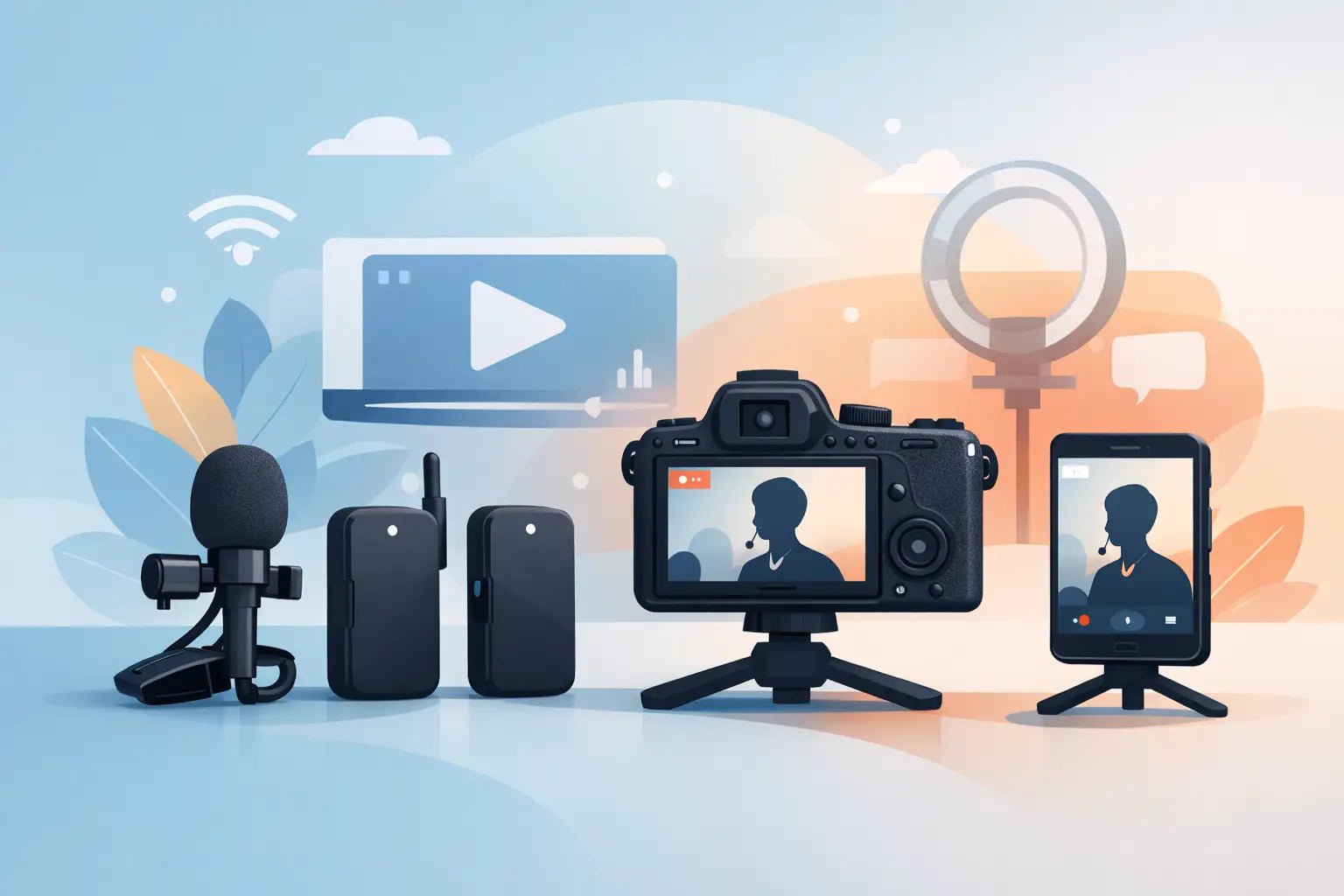
Bad audio is the fastest way to make a good YouTube video feel cheap. You can get away with handheld footage, mixed lighting, even a less-than-perfect backdrop. But if your voice sounds distant, windy, or hollow, viewers notice right away. That is why choosing the right wireless lavalier mic for YouTube matters more than most creators expect.
For mobile creators especially, audio gear has to do two things at once. It has to sound clean, and it has to stay out of the way. Nobody wants a setup that turns a quick shoot into a cable mess or makes a simple talking clip feel like a studio production in the worst way. The best wireless lavalier systems are built for speed, portability, and vocal clarity that feels polished without feeling overproduced.
Why a wireless lavalier mic for YouTube makes sense
YouTube is crowded, and production quality is part of your first impression. A wireless lav mic clips close to your mouth, which gives you a stronger, more direct voice signal than the built-in mic on your phone or camera. That alone can make your content sound more intentional.
Wireless matters because creators move. You walk through a space, turn toward products, film in a car, shoot outside, or record a quick piece to camera without wanting to think about cables. A wired setup can still sound great, but it is rarely the best fit for creators who film on the go, post often, and need gear that keeps up.
There is also the style factor. Creator gear lives on camera now. If your setup feels clunky, oversized, or overly technical, it can interrupt the look of your content. Modern wireless mics are smaller, cleaner, and better suited to smartphone-first and action-cam workflows.
What actually makes a good wireless lavalier mic for YouTube
Not every wireless mic is built for the same type of creator. Some are designed for interviews, some for desktop streaming, and some for short-form mobile video. For YouTube, the right choice depends on how you shoot.
Voice clarity comes first
The main job is simple. Your voice needs to sound present, detailed, and easy to understand. That means the mic should capture speech cleanly without making you sound thin, harsh, or buried under room noise.
Some systems also include voice enhancement or onboard processing. That can be a smart feature if it improves intelligibility without making your audio feel artificial. For fast-moving creators, built-in enhancement can save editing time and help videos sound more consistent from shoot to shoot.
Portability is not a bonus
If you shoot with an iPhone, Android phone, DJI setup, or GoPro, size matters. A compact receiver and lightweight transmitter make it easier to keep your workflow simple. The less gear you have to mount, charge, adapt, and troubleshoot, the more likely you are to actually use it.
This is where a lot of larger audio systems miss the point. Specs can look impressive on paper, but if the product slows down your filming process, it is the wrong tool for the job.
Connection options matter more than people think
A wireless mic can sound great and still be frustrating if it does not work cleanly with your device. Before buying, check whether the system supports your primary setup natively. USB-C, Lightning, 3.5mm, and camera-specific compatibility all affect how fast you can get from case to recording.
For creators who use more than one device, flexibility matters. A mic that moves easily between phone, action cam, and camera rig gives you room to grow without replacing your audio setup every few months.
Range is useful, but only up to a point
A lot of people get pulled in by huge wireless range numbers. In real YouTube use, you probably do not need extreme distance. What you need is stable performance in common creator environments like apartments, cafes, sidewalks, cars, and small studios.
A mic with reliable short-to-medium range is often more valuable than one promising massive distances you will never use. Signal stability, resistance to interference, and clean performance in real spaces matter more than headline specs.
Matching the mic to your YouTube style
The best mic is the one that fits your content rhythm.
If you mostly film talking-head videos at home, almost any good wireless lav can improve your sound. In that case, focus on vocal tone, ease of setup, and how well the mic handles indoor reflections and HVAC noise.
If you vlog outdoors, portability and wind handling become much bigger priorities. A tiny mic is great, but not if it falls apart in street noise or starts clipping the second the wind picks up.
If you shoot tutorials, product explainers, or fitness content, movement matters. You need a mic that stays secure, keeps a stable signal, and does not become distracting on camera.
If you run interviews, dual-transmitter systems are worth a look. They let you mic two people at once and keep your workflow cleaner than trying to patch together separate recorders.
Common trade-offs creators should know
There is no perfect mic. Every system makes choices.
Smaller microphones usually look better on camera and feel easier to wear, but very compact designs can sometimes compromise battery size or onboard controls. Ultra-light systems are ideal for mobile creators, though heavier-duty options may offer more manual adjustment.
Automatic audio features can be helpful, especially for solo creators who do not want to monitor every setting. But if you are experienced and want full control in post, you may prefer a more neutral capture. It depends on how fast you need to publish and how much editing you like to do.
Budget also shapes the decision. Entry-level wireless mics have improved a lot, and many are good enough for new channels. But if content is tied to your business, your reputation, or paid brand work, stepping up in reliability and vocal polish is usually worth it.
How to choose without overthinking it
The smartest way to shop for a wireless lavalier mic for YouTube is to start with your real workflow, not a spec sheet.
Ask yourself what device you use most, how often you film outside, whether you need one mic or two, and how much editing you want to do later. If your process is fast and mobile, prioritize plug-and-play design, compact form, and consistent voice enhancement. If your setup is more controlled, you may care more about manual settings and monitoring options.
It also helps to think about visual fit. Audio gear is part of your creator identity now. A mic should feel current, clean, and built for modern content creation, not like leftover broadcast hardware clipped onto a social video.
That is where brands like Wynwood Sound are moving the category forward, combining creator-first portability with audio enhancement and design that feels right for the way people actually shoot today.
Setup tips that make any wireless lav sound better
Even the best mic can underperform if placement is off. Clip the transmitter or lav close to the center of your chest, high enough to capture your voice clearly but low enough to avoid sharp breath noise. Keep it from rubbing against hoodies, jackets, jewelry, or hair.
Watch your room too. Hard walls and empty spaces can make your voice sound echoey, even with a good mic. Soft furnishings help. So does moving a little closer to your camera setup when possible.
Outdoors, use the wind protection that comes with the mic. A tiny furry windshield may not look glamorous, but it can save an entire take. Good audio is always more stylish than avoidable wind noise.
Finally, do a quick test before recording your full video. Ten seconds is enough. Listen back on headphones. If something sounds off, fix it before you shoot the rest.
The real upgrade is confidence
A good wireless mic does more than clean up your sound. It changes how you create. You spend less time fighting gear, less time fixing audio in post, and less time wondering whether your video feels polished enough to publish.
That shift matters on YouTube, where consistency wins. When your setup is fast, your voice is clear, and your gear fits the way you move, showing up on camera gets easier. And when creating gets easier, posting gets easier too.
The best choice is not the mic with the longest feature list. It is the one that makes your voice sound like it belongs exactly where your content is headed.