
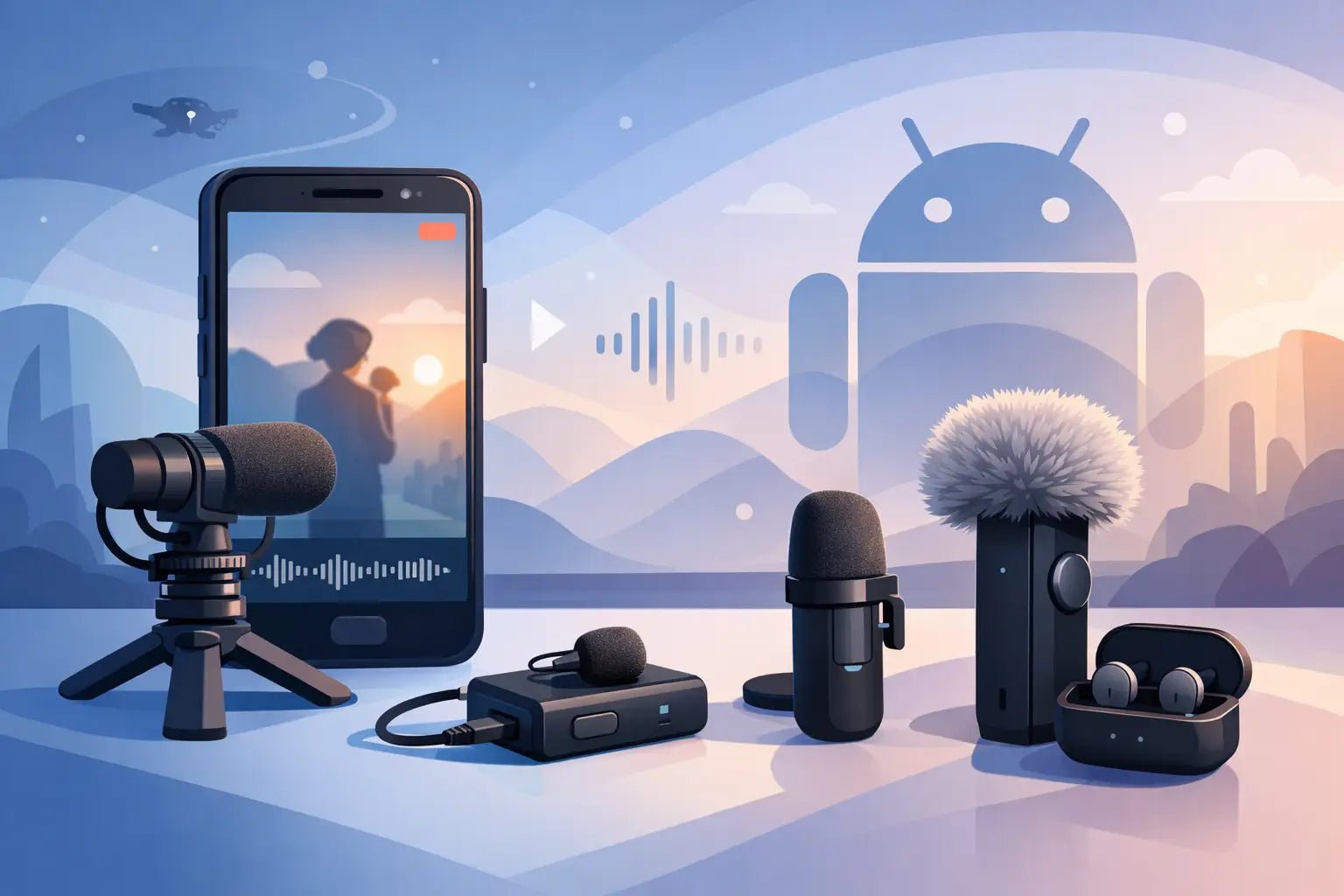
Bad audio gives away a phone-shot video in seconds. You can have clean framing, good light, and a strong edit, but if your voice sounds distant, windy, or thin, the whole piece feels cheaper than it is. That is why finding the best microphone for android videos matters so much for creators who want their content to look polished and feel worth watching.
The catch is that there is no single best mic for every Android setup. A solo vlogger walking city streets needs something very different from a fitness coach filming indoors or a small business owner recording product demos at a desk. The smart move is not chasing the most expensive option. It is choosing the mic format that matches how you actually shoot.
What makes the best microphone for Android videos?
For most creators, the answer comes down to four things: connection, clarity, portability, and speed. If a mic sounds great but takes too long to set up, it will stay in your bag. If it is compact but picks up too much room noise, your videos still lose.
Android adds one more layer. Not every phone handles external audio the same way. Some newer devices work well with USB-C plug-in mics. Others are more reliable with wireless systems that use a receiver. If you create often, consistency matters more than technical novelty.
The best microphone for android videos should fit a mobile workflow first. That means easy pairing, stable performance, and audio that flatters the human voice without making you babysit settings every time you hit record.
The main microphone types for Android creators
Wireless clip-on microphones
For most social creators, this is the front-runner. A wireless clip-on mic gives you freedom to move, keeps the frame clean, and usually captures clearer speech than your phone’s built-in mic. It is especially strong for talking-head videos, on-the-go vlogs, interviews, tutorials, and lifestyle content.
This style works because it keeps the mic close to your mouth. That simple detail changes everything. Your voice comes through with more presence, while traffic, room echo, or crowd noise gets pushed back.
The trade-off is battery management and signal reliability. Good wireless systems handle this well, but ultra-cheap ones can introduce dropouts, harsh compression, or inconsistent levels. If your content depends on speaking clearly and quickly, this is usually where spending a little more pays off.
USB-C plug-in microphones
These are ideal for creators who film at a desk, record voiceovers, or want a simple direct connection. Plug-in mics can sound excellent, and they remove the wireless variable. For controlled environments, that is appealing.
But they are less flexible for movement. If you are walking, gesturing, or switching angles often, a plug-in mic can feel restrictive fast. Some are also physically awkward on smaller phone rigs.
Lavalier microphones with wired connection
A wired lav can still be a solid value play. It clips close to the speaker, captures speech clearly, and costs less than many wireless systems. If you mostly shoot seated content or interviews in a stable position, it can work well.
The downside is visual and practical. Wires can snag, show in frame, and slow down setup. For creators who care about a clean, modern look, wired lavs are often more compromise than solution.
Shotgun microphones for phone rigs
Shotgun mics make sense when you want directional pickup and already shoot with a cage, grip, or more built-out mobile setup. They can outperform built-in phone audio by a mile, especially for landscape shooting or controlled scenes.
Still, they are not the easiest choice for everyday creator use. They add bulk, and their performance drops if the mic is too far from the speaker. For voice-first content, closeness usually beats directionality.
How to choose based on the content you make
If you film short-form videos for TikTok, Instagram Reels, or YouTube Shorts, a compact wireless mic is usually the best fit. You want something fast, low-profile, and flattering on voice. The goal is to sound sharper without turning setup into a production.
If you record interviews, look for a system that supports two transmitters. That keeps both voices consistent and avoids awkward workarounds. Dual-mic flexibility becomes valuable the moment your content expands beyond solo speaking.
If you shoot fitness, food, beauty, or hands-on tutorials, movement matters. A wireless system lets you stay expressive while keeping your audio locked in. That freedom reads better on camera and feels better during filming.
If you mostly work indoors at a desk, a USB-C mic can be a clean solution. You may get slightly richer sound for the money, and the setup stays simple. Just be honest about whether your content will stay that controlled.
The Android compatibility question
This is where many creators get tripped up. Android is not one uniform camera ecosystem. Different phones, apps, and USB-C implementations can affect how external microphones behave. A mic that works perfectly with one device may need extra setup on another.
Before buying, check whether the microphone is specifically designed for Android or supports USB-C mobile workflows clearly. That sounds basic, but it matters. Generic compatibility claims are not the same as reliable creator use.
You also want a system that does not force complicated adapters unless there is a real reason. Adapters add friction. Friction kills speed. And speed matters when your best content often starts as a quick idea.
Sound quality is not just about specs
Creators often get pulled into sample rates, bit depth, and spec-sheet language. Some of that matters. Most of the time, though, what matters more is how the mic handles your voice in real use.
Does it make speech feel close and clear? Does it tame harshness? Can it hold up when you step outside, turn your head, or speak with energy? Those are the questions that shape actual content quality.
Voice enhancement is especially relevant for Android video creators because so much content is consumed fast, on phone speakers, in noisy environments. A mic that helps speech cut through without sounding artificial gives you an edge where engagement actually lives.
Design matters more than people admit
Audio gear used to look purely technical. Lots of black boxes, cables, and parts that made you feel like you were setting up a lecture hall. That is changing, and it should.
If your microphone is going to appear on camera, clip to your shirt, or live in your pocket every day, design matters. Creators care about how gear fits their aesthetic because their tools are part of their presence. Sound with style is not fluff. It is part of the modern workflow.
That is one reason compact wireless systems are winning. They feel more aligned with how content gets made now - mobile, fast, visual, and personal. A mic should improve your production value without making your setup look dated or overbuilt.
So what is the best microphone for Android videos right now?
For most creators, the best choice is a compact wireless microphone system made specifically for mobile video. It gives you the strongest blend of vocal clarity, portability, and ease of use. It also scales well, whether you are filming street interviews one day or a product explainer the next.
If your content is voice-led and mobile-first, that format simply solves the most problems at once. Better proximity. Cleaner speech. More movement. Faster setup. A more polished result with less effort.
That is why products built around creator workflows stand out. A system like Wynwood Sound CreatorMic makes sense for Android users because it is designed around what modern creators actually need - better vocal presence, compact form, and a look that feels current instead of overly technical.
That said, if you only film stationary content in quiet spaces, a direct USB-C mic may be the better value. If budget is your main constraint and you can live with a cable, a wired lav can still get the job done. The best mic is the one you will use consistently, not the one with the most hype.
What to avoid when shopping
Avoid buying based on specs alone. Avoid ultra-cheap wireless kits with vague compatibility language. And avoid oversized solutions that make your phone rig harder to use than it needs to be.
A good Android video mic should make filming easier, not more fragile. If setup feels fussy, if audio monitoring is unreliable, or if the hardware looks awkward on camera, you will feel that friction every time you create.
The right mic should disappear into your process. Fast clip. Quick connection. Clean voice. Done.
If you are building content on Android, audio is one of the fastest upgrades you can make. Not because it is flashy, but because viewers trust what sounds clear. Pick the mic that matches your style, your pace, and your platform, and your videos will feel more intentional the moment you press record.