
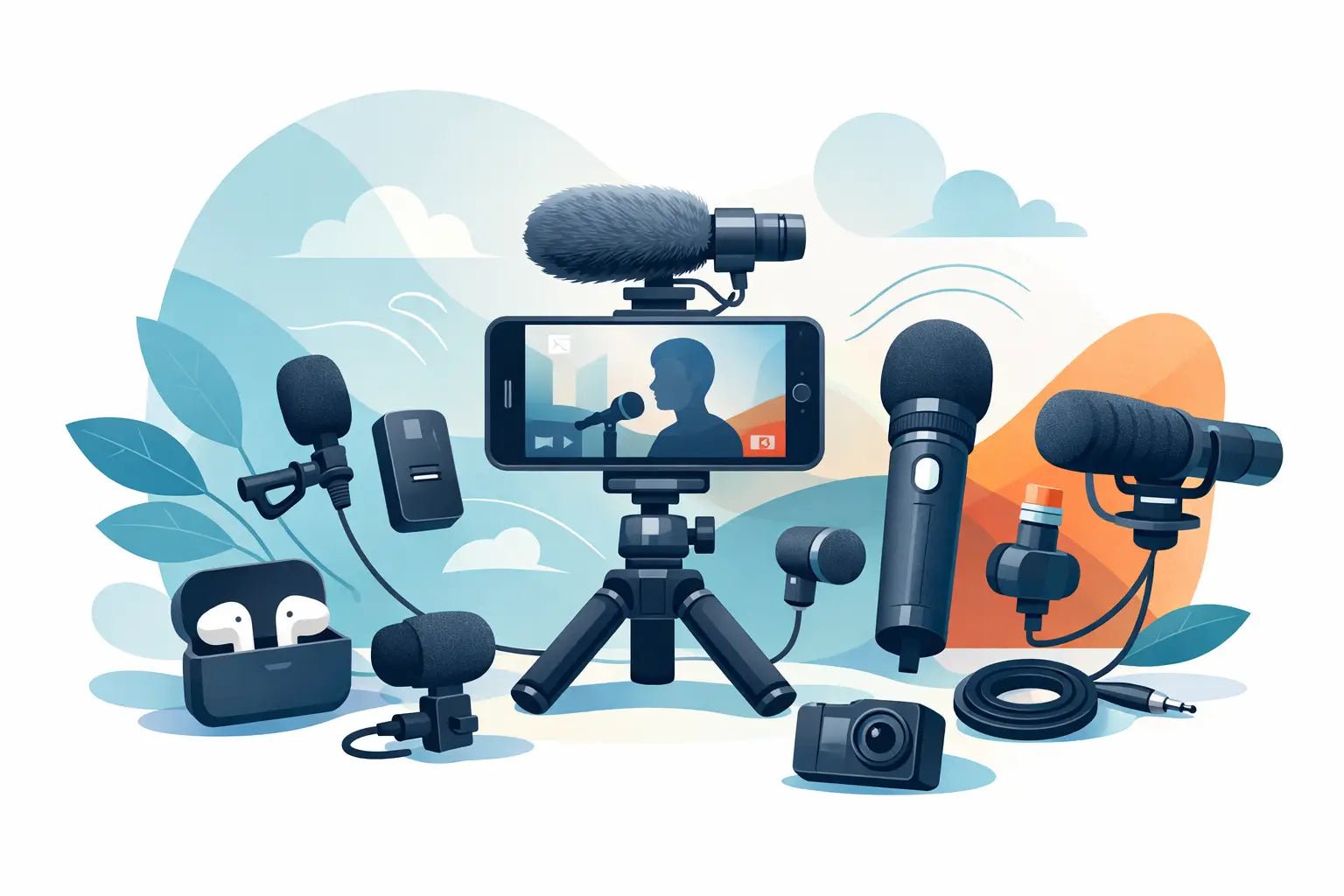
Bad audio gives away a rushed setup in seconds. You can shoot in 4K, color-grade like a pro, and still lose viewers if your voice sounds thin, distant, or buried under street noise. That is why the best microphones for mobile creators are not just about specs. They are about speed, clarity, and how well a mic fits the way you actually shoot.
If your workflow lives on an iPhone, Android phone, GoPro, or compact camera, the right microphone should feel invisible until you hear the playback. Clean vocals. Less friction. A setup you will actually bring with you. For creators chasing better retention, stronger brand presence, and more polished content without carrying a full studio, that matters.
What the best microphones for mobile creators need to do
Mobile creation is its own category. You are not building around a desk, a boom arm, and a treated room. You are filming in coffee shops, on sidewalks, in gyms, at events, in cars, and in hotel rooms five minutes before posting. That changes what counts as a great mic.
The first priority is voice clarity. Built-in phone microphones are fine for notes and casual clips, but they flatten your voice and pick up too much of the room. A dedicated mic should pull your voice forward and make speech sound more present. If your content relies on tutorials, interviews, commentary, or direct-to-camera storytelling, that vocal lift is the whole game.
The second priority is portability. A microphone can sound amazing and still be wrong for mobile creators if it needs too many adapters, cables, mounts, or menu settings. Small gear wins because small gear gets used. The best options are compact enough to live in a pocket, sling bag, or side pouch without becoming another thing to manage.
Then there is compatibility. Some creators switch between an iPhone and a laptop. Others move between Android, DJI, and GoPro setups in the same week. A good mobile microphone system should match your device mix, or at least make switching easy. The more locked-in your gear is, the more likely it becomes a workflow bottleneck.
Style counts too. That may sound secondary, but it is not. If a microphone looks bulky, dated, or overly technical, creators notice. Your tools are part of your on-camera presence, especially in social content where the setup itself is often visible. Clean design, low-profile hardware, and wearable form matter more than many brands admit.
Wireless vs wired for mobile creators
For most creators, wireless is the move. It gives you freedom to walk, frame wider shots, record reels or interviews, and keep your setup clean. If you film solo, a wireless clip-on mic is often the fastest path to better audio because it removes the cable management problem entirely.
There is a trade-off. Wireless systems cost more, require charging, and can vary in connection stability depending on where you shoot. Still, for mobile-first workflows, the convenience is hard to beat. If your content is about movement, lifestyle, travel, fitness, or street shooting, wireless usually makes more sense than wired.
Wired mics still have a place. If you mostly shoot at a desk, record voiceovers in controlled spaces, or need a budget option for talking-head content, a wired lav or compact USB-C mic can do the job well. They are simpler, more affordable, and one less battery to think about. They just do not feel as clean or flexible when you are moving fast.
The main microphone types worth considering
Wireless clip-on systems
This is the category that fits the widest range of mobile creators. You clip the transmitter to your shirt, connect a compact receiver to your phone or camera, and start recording. It is fast, discreet, and built for social video.
The best versions add voice enhancement, wind resistance, and a design that does not look like old broadcast gear shrunk down for TikTok. That mix of performance and appearance is where modern creator audio is heading. Products like Wynwood Sound's CreatorMic sit right in that lane, aiming for studio-style vocal clarity without making your setup feel heavy or technical.
Lavalier microphones
Traditional lav mics are still useful, especially if you want something subtle for interviews or education content. They are small and close to the mouth, which helps with clarity. The catch is the cable. If your content involves walking shots, outfit changes, or quick setups, wires can become the thing that slows you down.
A lav can be a smart pick for creators who record in one place and want a more discreet look than a visible wireless transmitter.
Shotgun microphones
Shotgun mics are great when you want directional pickup without clipping a mic onto clothing. They are popular for vlogging, handheld interviews, and setups where the mic stays on top of a phone cage or compact camera rig.
They work best when the mic is relatively close to your mouth. That means they are strong for arm's-length vlogging, but not always the best choice if your camera is several feet away. In noisy environments, they can help focus on your voice, though they are not magic. Distance still matters.
Mini USB and plug-in mics
These are small microphones that plug directly into a phone, tablet, or laptop. They can be excellent for voiceovers, podcast snippets, and desktop content. Their biggest advantage is simplicity. Plug in, record, done.
Their weakness is flexibility. They are less ideal for full-body framing, active shooting, or multi-person content. If your work is split between mobile editing, voice notes, and quick narration, they can still be a strong low-profile option.
How to choose the best microphones for mobile creators
Start with your content, not the spec sheet. A fitness coach filming workouts needs a different mic than a beauty creator filming close-up tutorials. A travel vlogger working outdoors has different needs than a founder recording product explainers from a home office.
If you move while filming, choose wireless. If your shots are mostly static and budget matters, wired may be enough. If your camera is close and you hate anything clipped to your shirt, a shotgun mic can feel more natural. If you mainly record voice at a desk, a direct plug-in mic might be the simplest upgrade.
Next, think about your recording environment. Outdoor creators should care about wind protection, connection reliability, and how well a mic keeps speech intelligible in busy spaces. Indoor creators should pay attention to room tone and how a mic handles echo. A mic that sounds polished in a quiet studio can fall apart on a noisy sidewalk.
Also look at how much setup friction you are willing to tolerate. Some creators do not mind adapters and extra pieces. Others need a system that works in under thirty seconds or it will stay in the bag. Be honest here. The best mic is often the one that makes high-quality audio feel automatic.
Battery life matters, but not in isolation. Fast charging, charging case design, and how easily you can check levels often matter more than the raw number on the box. The same goes for range. Most creators do not need extreme wireless distance. They need consistency at normal shooting distances.
What creators often get wrong
A common mistake is buying for maximum specs instead of actual use. You do not need a large, complicated audio setup to sound premium on social. You need clean voice capture with minimal hassle. Better audio should reduce friction, not add it.
Another mistake is ignoring how the mic looks on camera. For creators, appearance is part of performance. If a microphone feels awkward with your wardrobe, your framing, or your brand aesthetic, you may avoid using it. A compact, well-designed system tends to win more often simply because it fits the visual language of modern content.
The last miss is assuming any external mic will fix bad technique. Placement still matters. A wireless mic clipped too low or hidden under noisy fabric can sound worse than expected. A shotgun mic mounted too far away will still sound distant. Great gear helps, but only when it fits the shot.
The smart short list
If you want the simplest buying framework, narrow it down like this. Wireless clip-on systems are best for most mobile creators making social video, interviews, and on-the-go content. Lavalier mics are best for controlled talking-head setups where a cable is not a problem. Shotgun mics are best for handheld vlogging and rig-based shooting. Plug-in mics are best for desk content, narration, and quick voice capture.
That is the real answer behind the best microphones for mobile creators. There is no single winner for everyone. There is the mic that matches your platform, your pace, and your style.
The right microphone should make your voice sound more like your brand - clear, confident, and ready to post. When your audio feels effortless, your content does too.