
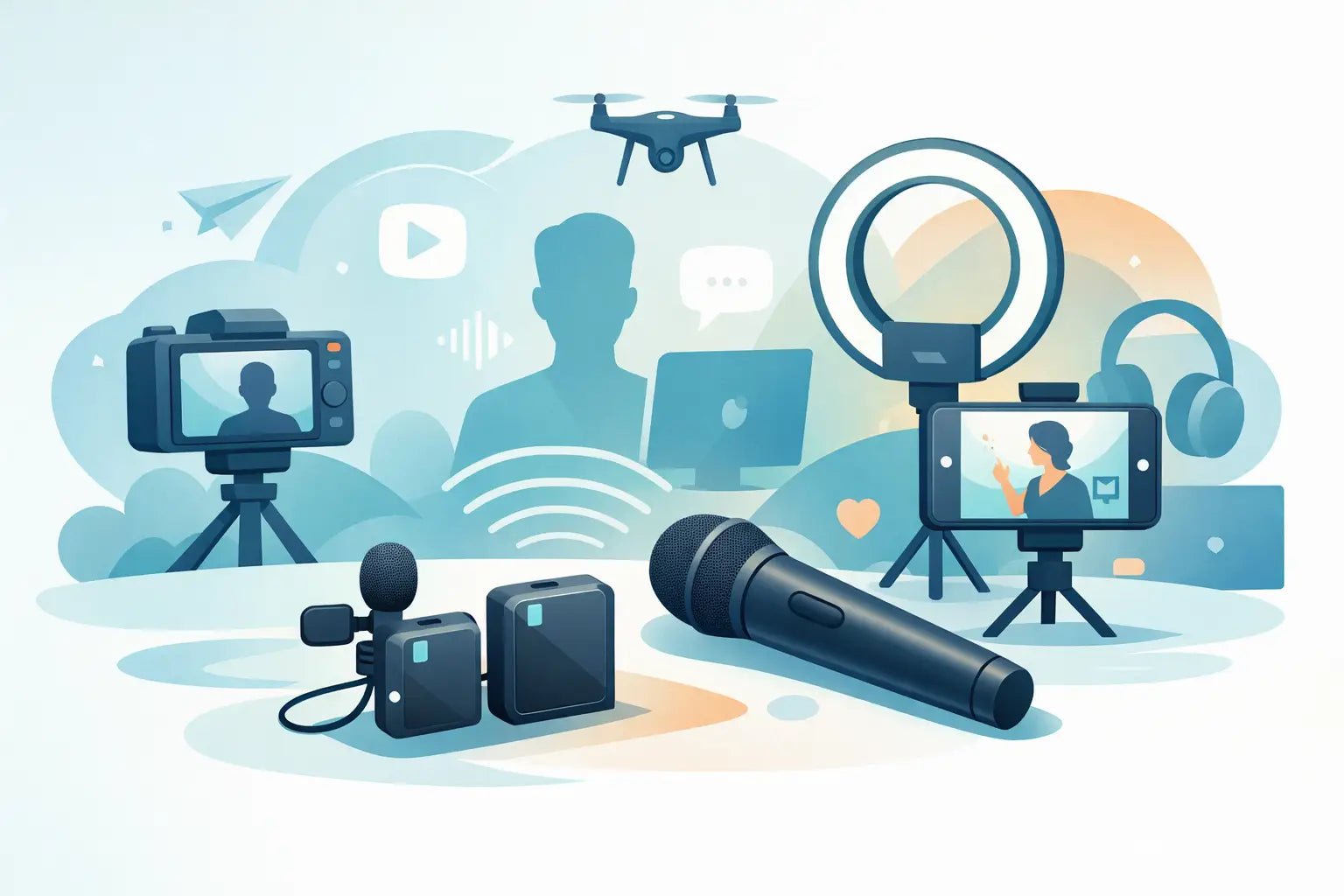
Bad audio gives you away fast. A great frame, clean edit, and strong hook can still fall flat if your voice sounds distant, hollow, or buried under street noise. That is why choosing the right wireless microphone for content creators matters more than most people realize. On social platforms, viewers will forgive a lot. Thin, messy audio usually is not one of those things.
For creators working on phones, action cameras, and lightweight rigs, the mic has to do more than record sound. It has to move with you, set up quickly, stay out of the shot, and make your voice feel present. It also has to fit the way modern creators actually work - fast shoots, changing locations, short attention spans, and gear that needs to look as good as it performs.
What creators actually need from a wireless microphone
Traditional audio advice often comes from studio or broadcast worlds. That is useful up to a point, but it does not always match creator workflows. If you are filming a reel on your iPhone in the morning, clipping a mic onto a hoodie for a street interview in the afternoon, and mounting an action cam by sunset, your setup needs flexibility first.
A strong wireless microphone for content creators usually starts with portability. Small transmitters and a pocketable receiver make a bigger difference than spec-sheet bragging. If the system feels bulky, annoying to clip on, or complicated to pair, it gets left in the bag. That means your built-in mic ends up doing the job, and that is rarely the look or sound you want.
Voice clarity is the next piece. Not just loudness. Clarity. Your audience should hear the shape of your voice, not just the presence of a voice. That is especially important for creators who talk directly to camera, record tutorials, post commentary, vlog in motion, or build a brand around personality. When your vocal sounds clean and close, your content feels more credible right away.
Then there is compatibility. A creator-first mic should work with the devices creators already use, including iPhone, Android, DJI, and GoPro setups. The more adapters, workarounds, and menu digging involved, the less useful the gear becomes in real life.
Why built-in camera audio keeps falling short
Phone and action-camera mics have improved, but they still have limits. They are too far from your mouth, too exposed to room echo, and too eager to capture everything around you. Wind, traffic, keyboard taps, cafe chatter, air conditioning - it all competes with your voice.
That creates a subtle but expensive problem. Your content may look casual by design, but bad audio does not read as casual. It reads as careless. For social-first brands, solo creators, coaches, streamers, and mobile filmmakers, that gap affects retention and trust.
A dedicated wireless mic closes that gap by bringing the microphone closer to the source that matters most - you. That shorter distance alone can dramatically improve intelligibility. Add voice enhancement, smart noise control, and stable wireless transmission, and you get a much more polished result without turning your setup into a production cart.
The best wireless microphone for content creators is not always the most technical
More features do not automatically mean better content. A lot of creators buy audio gear with pro-level settings, only to realize it slows them down. Menus become friction. Extra accessories become clutter. The whole system starts asking for too much attention.
The best choice is usually the one that balances performance with speed. You want a mic that sounds elevated, but also feels invisible in use. Clip it on. Connect. Record. That is the standard now.
This is where design matters more than many brands admit. Compact hardware, clean lines, and wearable form factor are not just aesthetic wins. They affect confidence on camera. If a microphone looks awkward, oversized, or overly technical, creators either hide it badly or avoid using it. Audio gear should support your on-camera presence, not compete with it.
Features worth caring about and features you can ignore
For most creators, a few things matter every single shoot. Stable connection is one. Dropouts ruin takes and waste time. Battery life matters too, especially if you batch content or move through long event days. Good mounting options matter because wardrobe changes everything. A mic that works on a tee but slips on a jacket is not as versatile as it looks online.
On the performance side, voice enhancement can be a real advantage when it is done well. The goal is not to make you sound processed. The goal is to make you sound more like yourself, just clearer, fuller, and easier to understand in less-than-perfect environments. That is very different from heavy-handed effects that leave speech sounding artificial.
What matters less depends on your workflow. If you are not mixing multi-person panels or recording cinematic dialogue scenes, you may not need a system built around complex manual control. If your content lives on TikTok, Instagram, YouTube Shorts, and quick-turn vlogs, speed and consistency often beat deep customization.
Choosing a wireless microphone for content creators by workflow
Not every creator needs the same setup, and this is where buying advice gets more honest. If you mostly shoot direct-to-camera talking videos, your priority is vocal presence. You need your speech to feel intimate and polished, even in small rooms or public spaces. A lightweight clip-on system with strong voice enhancement is often the smartest fit.
If you create outdoor content, movement changes the equation. Wind resistance, secure clips, and reliable transmission become more important. Action-camera users need something compact enough to stay practical on the go. Big receivers and fragile accessories do not belong on a fast mobile rig.
If you film with both phone and camera, compatibility can save you from carrying duplicate audio gear. A flexible system that moves between iPhone, Android, DJI, and GoPro workflows is a major quality-of-life upgrade. It keeps your setup lean and lets you adapt without rebuilding your kit.
And if your content is tied closely to your personal brand, appearance is not a shallow concern. It is part of the final frame. Clean industrial design and wearable styling make a difference when your gear is visible on screen.
Why creator-first design is becoming the new standard
The old model of audio gear assumed the user would adapt to the equipment. Modern creators expect the opposite. The gear should adapt to the pace, style, and visual language of the creator.
That shift is bigger than convenience. It reflects how content is made now. Creators are often writing, shooting, editing, and publishing themselves. They do not want a tool that needs a tutorial every time they power it on. They want something intuitive enough for quick capture and polished enough for paid work.
This is also why brands like Wynwood Sound have momentum in the space. Creator-centric wireless systems are no longer just about technical correction. They are about making better sound feel accessible, portable, and visually current. Sound with style is not fluff when the product lives on camera and in motion.
Common mistakes when buying your first wireless mic
One mistake is buying for edge cases instead of everyday use. It is easy to get pulled toward advanced features you may use twice a year. But if the system is too complex for your weekly workflow, it will not deliver much value.
Another mistake is ignoring your main recording device. A mic can sound great in reviews and still be wrong for your setup if connectivity is awkward. Always think about the device you actually use most, not the one you might upgrade to later.
The last mistake is treating audio quality as purely technical. For creators, audio is brand perception. Clean vocal capture makes your content feel more intentional. Better sound does not just improve listening. It changes how professional, trustworthy, and watchable you appear.
How to know you picked the right one
The right mic makes your workflow simpler, not heavier. You stop re-recording lines because of background noise. You spend less time fixing voice issues in post. You feel more comfortable filming in busy spaces because your audio holds up. And maybe most important, your content starts sounding more consistent across platforms and locations.
That consistency is where growth often happens. Audiences may not compliment your microphone directly, but they notice when your voice sounds close, clear, and confident. It keeps people watching. It makes branded content feel cleaner. It helps your personality come through without distraction.
The smart move is to choose a wireless microphone for content creators that matches the way you shoot now, while giving your audio a real upgrade. Not bigger. Not more complicated. Just sharper, lighter, and ready when you are.
Great content does not need a giant setup. It needs your voice to land the first time.