
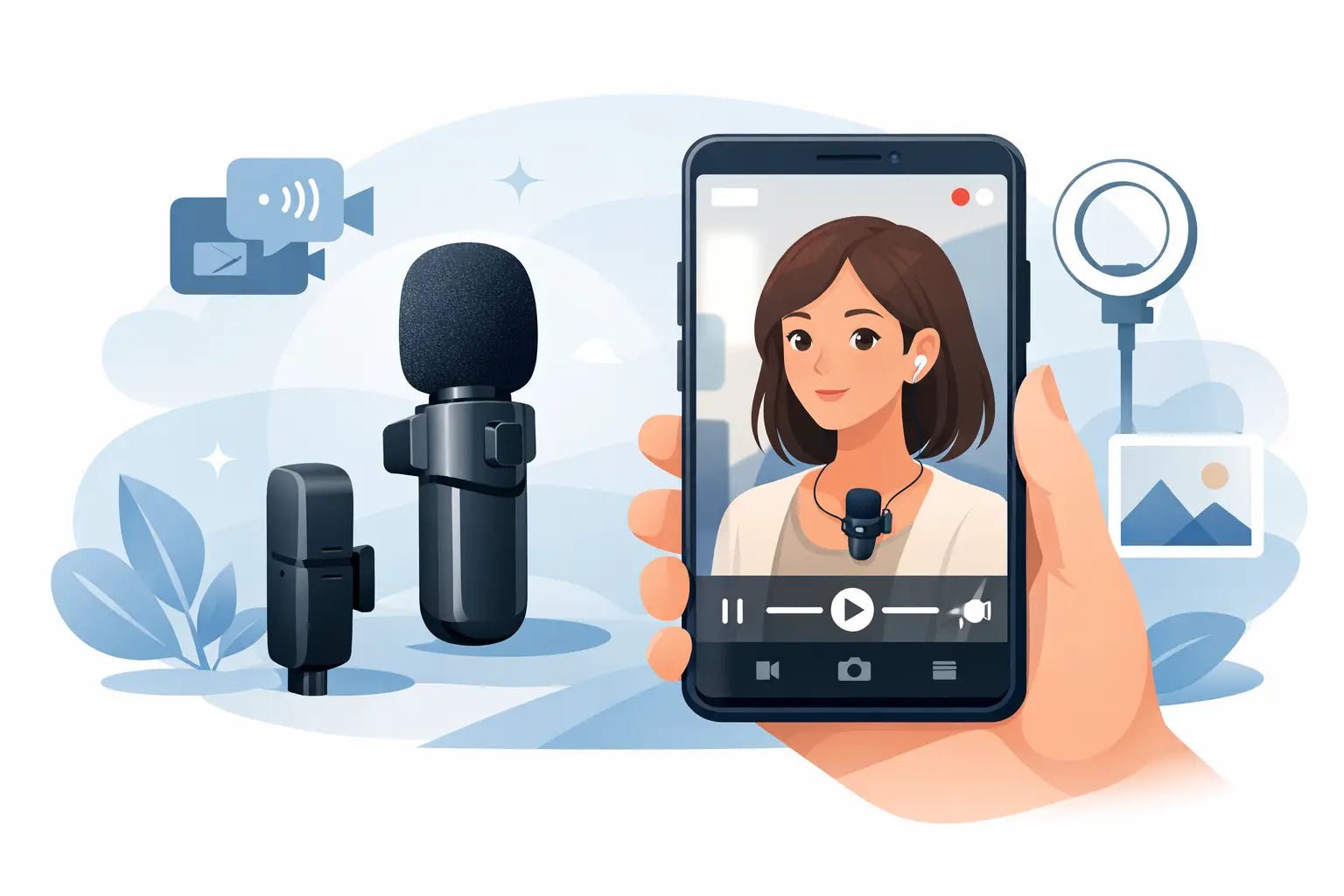
Bad audio makes good video feel cheap fast. You can shoot in 4K, grade your footage, and nail the framing, but if your voice sounds far away, windy, or hollow, people scroll. That is why a mini microphone for smartphone video has become one of the smartest upgrades in a mobile creator setup.
The appeal is obvious. You want sharper vocal presence without carrying a full audio bag. You want gear that works with your phone, moves with you, and does not kill the look of your content. For TikTok, Reels, YouTube, interviews, vlogs, or quick brand shoots, the right mini mic gives your videos a cleaner, more confident feel without slowing you down.
Why smartphone video needs a better mic
Phone cameras have improved at an incredible pace. Phone microphones have improved too, but they still face the same basic limits. They are built into the device, usually several inches away from your mouth, and they capture everything around you along with your voice. Street noise, room echo, AC hum, traffic, chatter - it all gets invited in.
That distance is the real issue. Great spoken audio usually comes from getting the mic closer to the speaker. A compact external mic solves that immediately. Instead of relying on the tiny microphone built into your phone body, you put the mic near your collar, your hand, or your subject. Your voice gets more detail. Background noise feels less dominant. The result is simple but powerful: your content sounds intentional.
For creators, that shift matters. Better audio does not just sound nicer. It makes you feel more credible on camera. Viewers stay longer when they can hear you clearly, especially in short-form video where attention is already fragile.
What makes a mini microphone for smartphone video worth buying
Small size alone is not enough. A lot of compact mics look creator-friendly but fall apart in real use. The best options balance audio quality, convenience, and style.
First, pay attention to connection type. Some mini microphones plug directly into a phone. Others are wireless and use a receiver that connects to your device. Plug-in mics can be great for stationary setups or quick voiceovers, but wireless systems usually win for movement. If you film walking shots, tutorials, interviews, fitness content, or any kind of social video where freedom matters, wireless makes the workflow feel lighter.
Second, think about voice clarity over raw specs. Many brands throw technical language at you, but most creators do not need to obsess over engineering terms. What you actually need is speech that sounds present, clean, and easy to understand. A mic with good voice enhancement can make a huge difference, especially if you often record in less-than-perfect spaces.
Third, look at portability as part of the experience, not just the dimensions. A mini mic should disappear into your setup. It should fit in a pocket, charge quickly, pair without drama, and clip on without making your outfit look like a production rig. For creators who care about presentation, industrial design is not a bonus. It is part of the product.
Wired or wireless?
This is where it depends on how you create.
A wired mini mic can be a smart low-cost choice if you mostly shoot seated videos, desk content, or direct-to-camera pieces where your phone stays in one position. It is simple, often affordable, and you never need to worry about wireless pairing. The trade-off is movement. Wires can catch on clothing, limit framing, and make quick location changes more annoying than they should be.
A wireless mini microphone for smartphone video is usually the better fit for modern creator workflows. It gives you room to move, keeps your frame clean, and feels more natural when shooting lifestyle content, walk-and-talk clips, interviews, or product demos. The trade-off is battery management and slightly more setup. But for most creators, that flexibility is worth it.
If your content lives on social platforms and speed matters, wireless tends to feel more premium in practice.
Features that actually matter on shoot day
Creators do not need a giant checklist. You need a few features that change the outcome.
Reliable transmission matters because dropouts ruin otherwise strong takes. Good battery life matters because dead gear kills momentum. Wind handling matters if you shoot outside even occasionally. Easy phone compatibility matters because adapters and weird connection issues waste time and patience.
Then there is onboard processing. This is one of the biggest shifts in compact audio right now. A mini mic with smart voice enhancement can help smooth out inconsistent levels and make speech cut through more clearly. For creators who shoot fast, travel light, or record in mixed environments, that kind of help is not just nice. It is practical.
Design matters too. A sleek mic changes how comfortable people feel wearing it on camera. If it looks sharp, it feels like part of the setup instead of a compromise. That is one reason creator-focused brands have started treating microphones less like pro-only tools and more like modern tech accessories. Sound with style lands differently.
How to choose the right mini microphone for smartphone video
Start with your content format. If you mostly record yourself speaking to camera, prioritize vocal detail and ease of use. If you shoot interviews, you may want a system that supports more than one transmitter. If you make travel or action content, size and mounting flexibility become more important.
Next, think about your phone ecosystem. iPhone users, Android creators, and people who switch between smartphones, action cameras, and small creator rigs need to be more careful about compatibility. The best mic for one setup can be a headache in another. Check how the receiver connects and whether the system is designed for the devices you actually use every week.
Also be honest about your environment. If you mostly shoot indoors in quiet spaces, almost any decent compact mic will sound better than your phone alone. But if you film outside, in cafés, at events, in a car, or around city noise, quality control becomes more important. That is where better noise handling and stronger vocal focus really earn their keep.
Finally, think about how much friction you are willing to tolerate. Some gear sounds great but takes too long to set up. Some is tiny but feels flimsy. Some works well but looks dated on camera. The right mic is not the one with the longest spec sheet. It is the one you will actually bring, clip on, and trust.
Common mistakes creators make
The first mistake is buying only on price. Cheap audio gear can work, but ultra-budget mics often create new problems - hiss, unstable connections, weak clips, poor battery life, or dull voice pickup. Saving a little upfront can cost you more in reshoots and frustration.
The second mistake is ignoring the visual side. For a smartphone creator, your tools are part of your brand language. If a mic looks bulky, awkward, or too technical, it can clash with the clean, fast, polished style most social content aims for.
The third mistake is expecting any mic to fix bad recording habits. Even the best compact system needs decent placement. Clip it too low, rub it against fabric, or stand in heavy wind, and the result will suffer. Great gear still works best with basic awareness.
A better creator setup, without the bulk
A strong mini microphone should make your setup feel lighter, not more complicated. That is the real benchmark. It should improve your voice, clean up your workflow, and let you move from idea to recording with less resistance.
For mobile creators, that mix of performance and portability is the sweet spot. You do not need a giant audio kit to sound more professional. You need a compact system built for the way content actually gets made now - fast, mobile, visual, and personal. That is exactly why products like Wynwood Sound's CreatorMic stand out. They are designed for smartphone-first creators who want studio-style clarity in a format that fits modern shooting habits.
If your videos already look good, audio is probably the next upgrade with the biggest payoff. The right mini microphone for smartphone video does not just make people hear you better. It makes your work feel more finished, more confident, and more worth watching.
Pick the mic that fits your pace, your platform, and your style - then let your voice carry the frame.